Take the doors off the fridge. That one step, skipped more than any other, is why an old refrigerator ends up parked at the curb for a second week in Toronto. Prepping an appliance for pickup takes about ten minutes, and most of that is just emptying it and wiping it down.
We have carried enough dead fridges, leaky washers, and tired window units out of Toronto homes to know where pickup day goes wrong, and it is almost never the part people worry about. A dead appliance is also more than clutter. A fridge weeping refrigerant, or a damp washer left to sit in a basement, works against the clean air you want in the house, so moving it out properly with a licensed and insured junk removal company is worth the ten minutes. Here is how to do it, from the empty-and-dry basics to the refrigerant question that trips everyone up.
TL;DR Quick Answers
Junk Removal Toronto
Junk removal in Toronto is a service that hauls away and disposes of the items the City won't take at the curb, or that you would rather not move yourself: old appliances, furniture, electronics, and renovation debris. A crew does the lifting, loading, transport, and proper disposal, including refrigerant recovery on fridges and AC units.
What it usually covers:
Heavy or bulky items pulled from inside the home, including basements and upper floors, not just the curb
Same-day or scheduled pickup, often within a few hours
Sorting for donation and recycling before anything goes to landfill
Compliant handling of appliances, e-waste, and refrigerant
In our experience, the hauling is the easy part. The real value is access: getting a washer up a tight basement stairwell or clearing a whole unit in one trip is where a crew beats a DIY curbside run.
Top Takeaways
Empty, clean, and dry every appliance before pickup so it does not sit there breeding odor and mold.
Pull the doors off fridges, freezers, and ovens. It is required, and it is the top reason pickups get skipped.
Leave the Freon alone. The City and certified haulers recover refrigerant for you.
Stage items with clearance, out by 7 a.m., and never on a snowbank.
Curbside for cheap, donation for working units, a crew for heavy, multi-item, or hard-to-reach jobs.
What Toronto Counts as an Oversized Appliance
Toronto files large appliances under “oversized and metal items,” the same bucket as furnaces and hot water heaters. The quick test: if it measures more than about 1.2 metres in any direction or tips past 20 kilograms, it counts. The City picks these up at the curb on your regular garbage day when you set them out right, and you already pay an annual oversized and metal collection fee whether you use it or not. If you are not sure your item qualifies, the City’s Waste Wizard answers that in a few seconds.
Empty, Clean, and Dry It
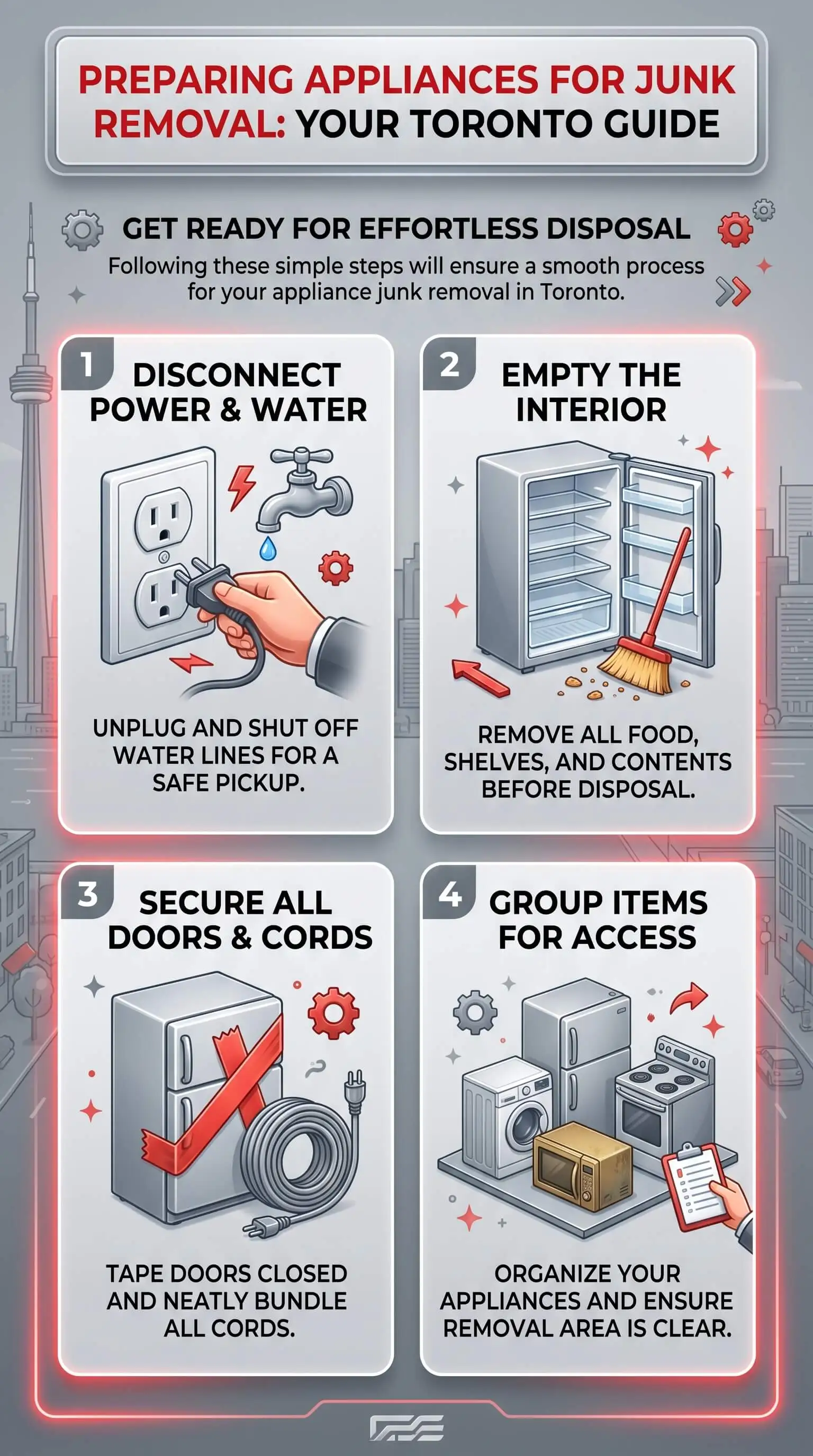
Clear everything out first. Pull the food, the water, the loose shelves and trays, then wipe the inside down and let it dry. Ten minutes here saves you from odor, mold, and the kind of mess that makes a crew slow down or a neighbour complain while the unit waits at the curb, which also reflects the importance of duct sanitizing when moisture, buildup, or indoor air quality concerns are part of the bigger home-cleanliness picture.
Disconnect and Secure
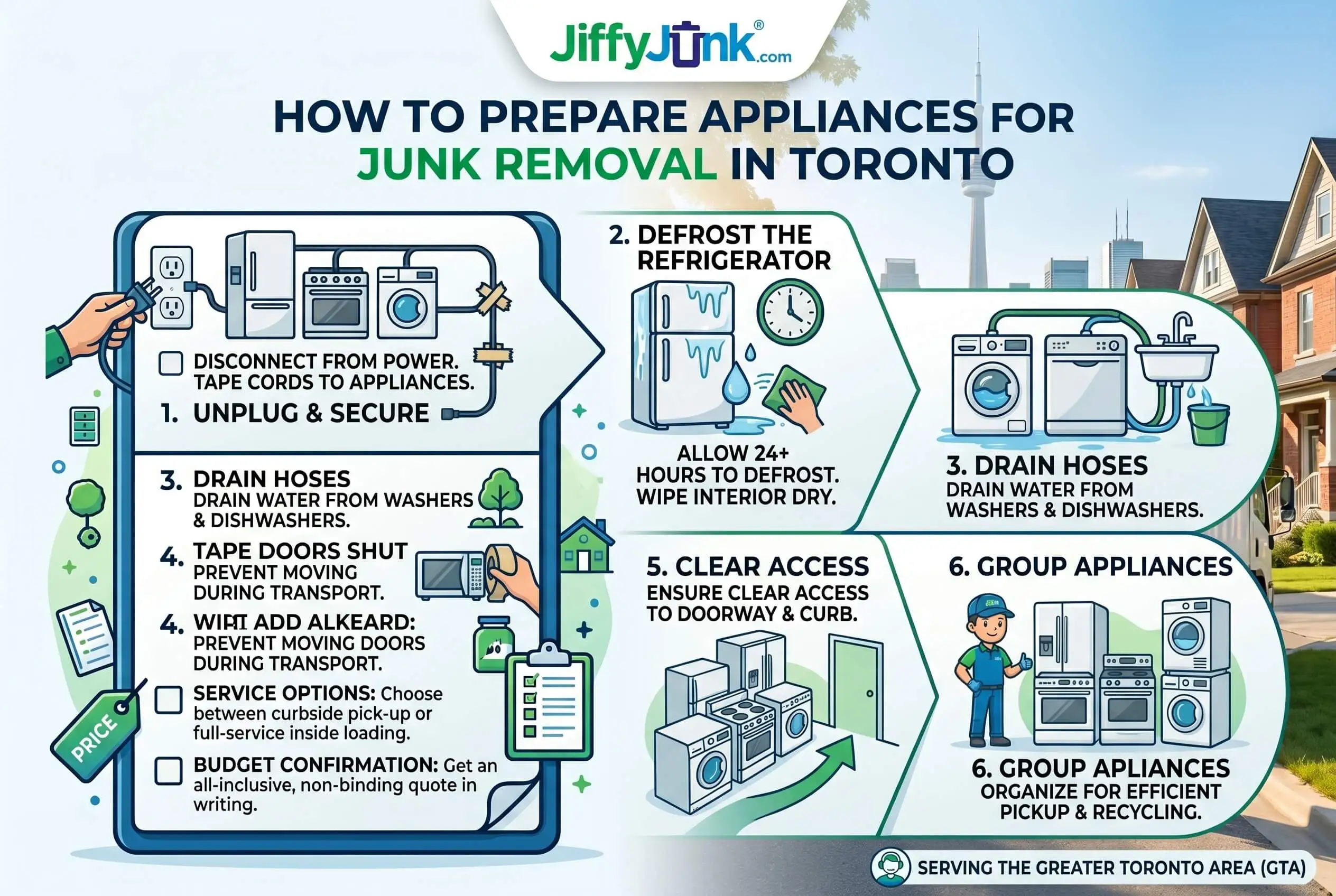
Unplug it. For washers, dishwashers, and ice-maker fridges, shut the water off and disconnect the lines so nothing drips on the way out. Coil the cords and hoses and tape them to the body. A loose cable is what catches on a stair edge and turns a simple carry into a dropped appliance.
Take the Doors Off
Here is the one people miss. Toronto’s rules say the doors come off refrigerators, freezers, and ovens before collection, and there is a real safety reason behind it: a sealed appliance left at the curb can trap a curious child or pet. A fridge set out with its door still on is the single most common reason a Toronto pickup gets skipped.
Stage It for Pickup
Move the appliance to a spot the truck can actually reach, near the curb, with about half a metre of clearance around it. Have it out by 7 a.m. on collection day, or set it out the evening before during the overnight window the City allows. Winter changes the math. Never put items on or behind a snowbank, and if a storm rolls in, hold the appliance until your next collection day rather than gamble on a missed pickup.
What About Freon?
This is the part that worries people, and it is the part you can stop worrying about. In Ontario, you do not pull the Freon yourself. If the appliance leaves in one piece, the City or a qualified hauler recovers the refrigerant as part of the job, and the law only lets certified technicians do that work anyway. Refrigerant becomes a separate step in one case: when a unit has to be cut apart to get it out of a tight space. The reason any of this matters is what sits inside an older fridge or freezer, which can carry ozone-depleting refrigerant and foam, mercury switches, and compressor oil. Those belong in a proper recycling stream, not a landfill.
City Pickup, Donation, or a Junk Removal Service
City curbside collection is the low-cost floor. The catch is that it runs on the City’s calendar, and you do the moving and prepping yourself, doors and all.
Donation beats the curb if the appliance still runs. Habitat for Humanity ReStore takes many working appliances, often picks them up, and hands you a charitable tax receipt for the assessed value.
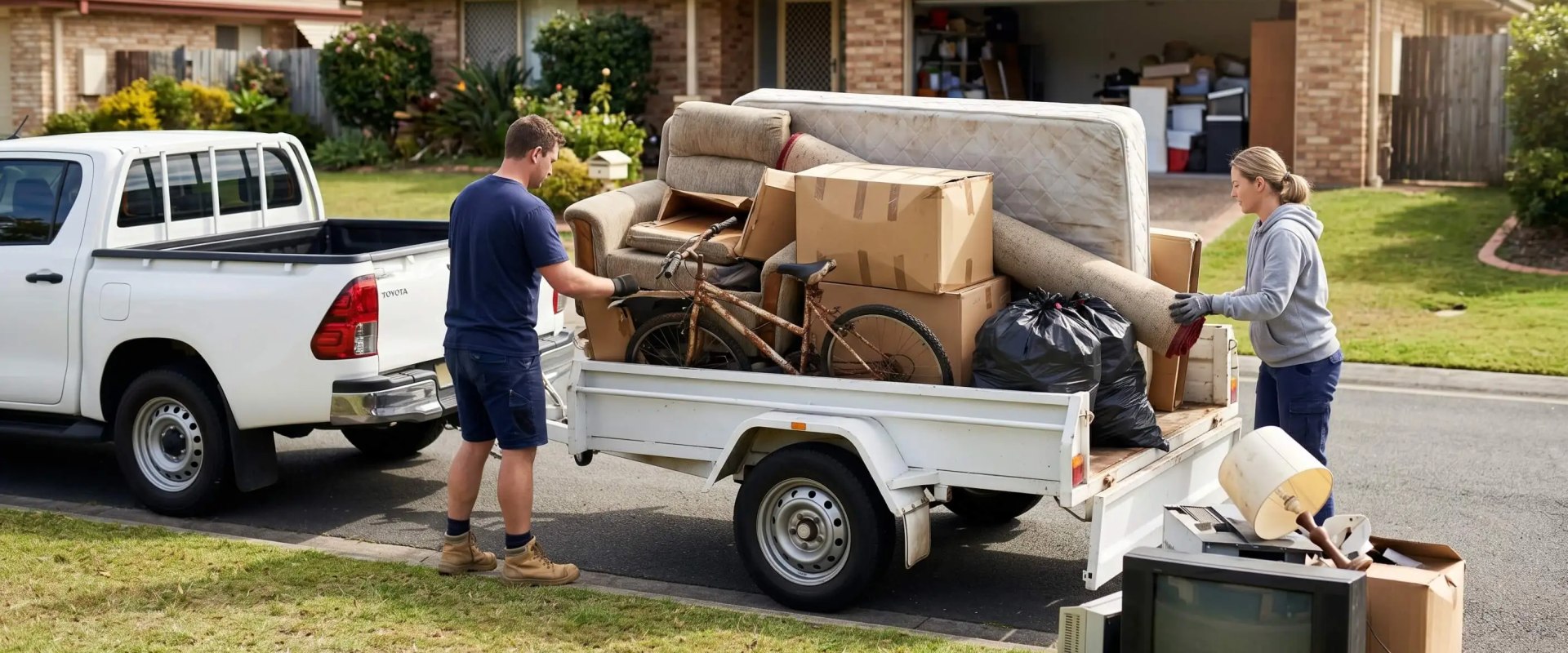
A professional crew earns its fee when the item is buried in a basement or stranded on a third floor, when you have several pieces to clear at once, when you need it gone today, or when a unit has to come apart to get out the door. A junk removal team in Toronto does the lifting, the hauling, and the compliant disposal, refrigerant included, so you are not stacking three errands or wrestling a fridge down the stairs on your own.
“After more than ten years booking appliance pickups across the GTA, the pattern holds: the jobs that fall apart are the ones where prep got skipped, and the fridge door is the worst offender. People assume we will pop it off on site, but the City wants it gone before set-out, and that one miss costs the homeowner another week with a fridge in the driveway. The Freon, on the other hand, is nothing to lose sleep over. You are not meant to touch it. We handle it the second the unit is on the truck. Where we really save people is access. A washer in a finished basement with a tight turn at the top of the stairs was never a curbside job, and that is the moment to call a crew instead of fighting it alone.”
7 Essential Resources
City of Toronto – Oversized & Metal Items: the official set-out rules for appliances, doors included.
City of Toronto – Waste Wizard: type in any item and it tells you exactly how to get rid of it in Toronto.
City of Toronto – Proper Waste Set Out: timing, placement, and clearance so nothing gets left at the curb.
City of Toronto – TOwaste App: collection reminders, the Waste Wizard, and donation and drop-off spots on your phone.
U.S. EPA – Appliance Disposal: a straight explainer on refrigerants, foam, and why careful disposal matters.
Habitat for Humanity Canada – ReStore: donate a working appliance, often with free pickup and a tax receipt.
Jiffy Junk – Toronto Junk Removal Cost Guide: what appliance and junk removal actually runs in Toronto.
3 Statistics
11 to 13 million. The U.S. Environmental Protection Agency estimates that 11 to 13 million refrigerated household appliances reach the end of their life every year. Appliance disposal is routine, and it is enormous.
850,000 tonnes. Toronto managed close to 850,000 tonnes of waste in 2024, and Ontario’s landfill capacity is projected to run out around 2034. Keeping a recyclable appliance out of the ground is a local, dated problem, not an abstract one.
1 million+ pounds. Habitat for Humanity ReStore reports diverting more than one million pounds of household goods from Canadian landfills, which is what donating one working fridge adds up to at scale.
Final Thoughts and Opinion
The prep is genuinely simple: empty it, dry it, disconnect it, take the doors off, set it where it can be reached. Do that and most junk removal service appointments go off without a hitch. Here is my honest read after years of these jobs. People overthink the refrigerant and underthink the logistics. A good junk removal service knows how to handle the pickup properly, but what wrecks a day is a heavy unit jammed behind a tight basement turn, or a fridge set out with the door still attached. If the appliance still works, donate it first, because a working unit deserves a second home and the landfill has a deadline. If it is dead, heavy, or awkward to move, that is the moment a professional junk removal service crew is worth every dollar.
Frequently Asked Questions
Do I need to remove the Freon before junk removal in Toronto?
Usually not. In Ontario, if the appliance leaves in one piece, the City or a qualified hauler recovers the refrigerant, and only certified technicians are allowed to do it. It only becomes your problem if a unit has to be cut apart to move it.
Will the City of Toronto pick up my old appliance?
Yes. Appliances sit in the City’s oversized and metal items category and go out on your regular garbage day when you set them out correctly. You already pay an annual collection fee for it. Check the Waste Wizard to confirm the rules for your exact item.
Why do I have to take the doors off the fridge?
Toronto’s set-out rules require it for refrigerators, freezers, and ovens. It prevents missed pickups, and it keeps a sealed appliance from becoming a trap for a child or pet at the curb.
What is the difference between City pickup and a junk removal service?
City pickup is cheap but runs on the City’s schedule, and you move and prep the item yourself. A crew handles the lifting from basements or upper floors, removes several items at once, works on your timing, and takes care of compliant disposal.
Can I donate an appliance instead of throwing it out?
If it still works, yes. Habitat for Humanity ReStore takes many working appliances, often picks them up, and gives you a charitable tax receipt. It keeps a usable item out of the landfill, which is the greener call.
How do I prep an appliance for pickup day in winter?
Stage it where it stays reachable, never on or behind a snowbank, with room around it. If a storm hits, hold oversized or electronic items until the next collection day so you do not lose the pickup, just as you would schedule air duct cleaning when access is clear and conditions make the service easier to complete properly.
Call to Action
Clear that old appliance out this week. Do the ten-minute prep, then pick your lane: book a City pickup, drop a working unit at a Habitat ReStore, or hand the heavy, awkward jobs to a crew that deals with the lifting and the refrigerant for you. If it involves stairs, several items, or a fridge you would rather not carry, a Toronto junk removal team can have it gone today. Choose your route and take the space back.